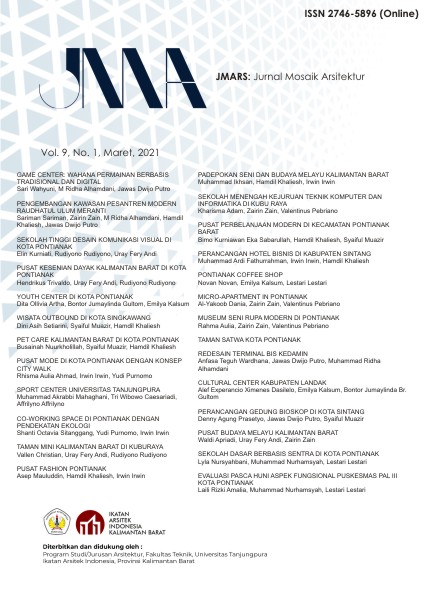
TAMAN SATWA KOTA PONTIANAK
DOI:
https://doi.org/10.26418/jmars.v9i1.44461Keywords:
Animal Park, ex-situ conservation, animals, visitorsAbstract
Animal Park is a form of ex-situ conservation institution that functions as a forum for preserving fauna outside of their natural habitat which is public. Besides having a conservation function, the Animal Park also has recreational, educational and research functions. Animal Park Planning in Pontianak City is also a form of designation and management of protected areas that are able to pay attention to the sustainability of supporting environmental functions in Pontianak City. This article aims to explain the process of designing a Wildlife Park as a recreation and tourism center regarding the introduction of native animals of West Kalimantan. The theme or design concept that is planned is the consideration of the animal's life behavior without reducing the comfort from the visitor's side. This design provides a boundary between the end zone and the animal zone, as well as the placement of a management service zone that is separate from the visitor zone but can still be connected to each animal enclosure. In the design carried out, the enclosure for the animal habitat uses a membrane structure for primate species and a wide-span structure to form an aviary enclosure for aves species.
References
Anwar, T. (2018, May 22). Suhu Aspal saat Penghamparan. Retrieved from: https://aspalmixingplan.blogspot.com
BSP Guard. (2017, November 27). Mengenal Jenis Alat Pemadam Kebakaran dan Fungsinya. Retrieved from: https://www.bspguard.co.id
CITES. (2020, January 20). Status Konservasi Satwa. Retrieved from https://www.cites.org
IUCN Red List. (2020, Jan 18). Diagram Status Konservasi Satwa. Retrieved from https://www.iucnredlist.org
Kementerian Kehutanan Republik Indonesia. (2012). Peraturan Menteri Kehutanan Republik Indonesia No. P.31/Menhut-II/2012 Tentang Lembaga Konservasi. Jakarta: Kementerian Kehutanan Republik Indonesia
Kementerian Lingkungan Hidup dan Kehutanan Republik Indonesia. (2018). PERMENLHK No. P.20/ MENLHK/ SETJEN/ KUM.1/ 6/ 2018 Tentang Jenis Tumbuhan dan Satwa Yang Dilindungi. Jakarta: Kementerian Lingkungan Hidup dan Kehutanan Republik Indonesia
Mehta, R. (2018), Design Guidelines for Zoos. New Delhi; Central Zoo Authority
Neufert, E. (2002), Data Arsitek, Jakarta; Erlangga
Nuraini, C. (2010). Metode Perancangan Arsitektur. Bandung: Karya Putra Darwati
Pemerintah Daerah Kota Pontianak. (2013). Peraturan Daerah Kota Pontianak No. 2 Tahun 2013 Tentang Rencana Tata Ruang Wilayah Kota Pontianak Tahun 2013-2033. Pontianak: Pemerintah Daerah Kota Pontianak
Pemerintah Daerah Kota Pontianak. (2014). Peraturan Daerah Provinsi Kalimantan Barat No. 10 Tahun 2014 Tentang Rencana Tata Ruang Wilayah Provinsi Kalimantan Barat Tahun 2014-2034. Pontianak: Pemerintah Daerah Kota Pontianak
Ramadhan, M. (2020, June 25). Pengertian, Fungsi dan Jenis Turap. Retrieved from: https://www.asdar.id
Rani. (2016, December 5). Grass Block. Retrieved from: https://pavingblockindonesia.wordpress.com
Downloads
Additional Files
Published
Issue
Section
License

This work is licensed under a Creative Commons Attribution 4.0 International License.
You are free to:
- Share "” copy and redistribute the material in any medium or format
- Adapt "” remix, transform, and build upon the material for any purpose, even commercially
Under the following terms:
- Attribution "” You must give appropriate credit, provide a link to the license, and indicate if changes were made. You may do so in any reasonable manner, but not in any way that suggests the licensor endorses you or your use.
- No additional restrictions "” You may not apply legal terms or technological measures that legally restrict others from doing anything the license permits.
Notices:
- You do not have to comply with the license for elements of the material in the public domain or where your use is permitted by an applicable exception or limitation.
- No warranties are given. The license may not give you all of the permissions necessary for your intended use. For example, other rights such as publicity, privacy, or moral rights may limit how you use the material.
