
Inventarisasi Mikroalga dan Protozoa pada Instalansi Pengolahan Air Limbah Karet Sistem Biofilter Skala Laboratorium
DOI:
https://doi.org/10.26418/protobiont.v4i3.13241Keywords:
inventory, microalgae, protozoa, wastewater, biofilterAbstract
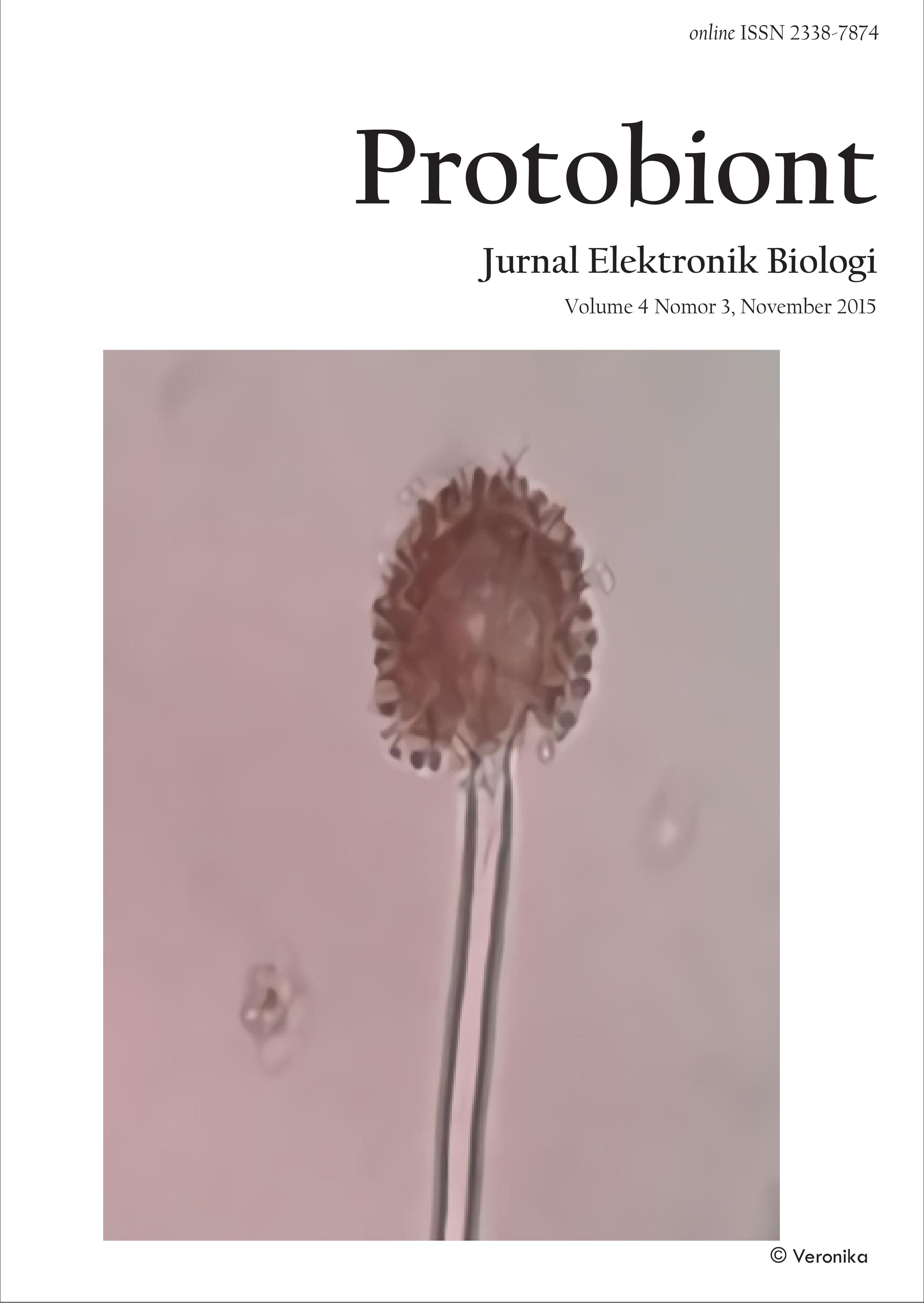
The treatment of liquid waste from rubber can be done with a biofilter method, which is by using micro-organisms attached to the filter to help the process of organic material degradation. The changes that occur to the organic substance in the waste will affect the composition of microalgae and protozoa during the treatment process. The purposes of this research is to find out types of microalgae and protozoa, their abundance in the rubber waste water treatment plant, and the quality of waste during the treatment. The research was conducted from September 2014 until January 2015. The research was conducted on the laboratory scale through observation of the microalgae and protozoa growth. The findings indicates that there are 36 genera of microalgae and 7 genera of protozoa. It shows that the highest abundance in the group of microalgae belong to Chlorophyceae class, whereas protozoa group is in the Sarcodina class. The genus which is able to adapt well would survive during the waste treatment processing. The genus which survived during waste treatment process from the microalgae group was Cyanidium and from the protozoa group was Arcella.
Downloads
Published
Issue
Section
License
Authors who publish with this journal agree to the following terms:
- Authors retain copyright and grant the journal right of first publication with the work simultaneously licensed under a Creative Commons Attribution-ShareAlike License that allows others to share the work with an acknowledgement of the work's authorship and initial publication in this journal.
- Authors are not restricted by the journal from entering into separate, additional contractual arrangements for the non-exclusive distribution of the journal's published version of the work (e.g., posting it to an institutional repository or publishing it in a book), with an acknowledgement of its initial publication in this journal.
- Authors are permitted and encouraged to post their work online (e.g., in institutional repositories or on their website) after its publication in this journal. This approach aims to safeguard against potential plagiarism or unauthorized use of unpublished manuscripts, as outlined in the submission guidelines which state that this journal does not accept previously published manuscripts.
