
Jamur MikorizaVesikularArbuskular (MVA) pada Rhizosfer Tanaman Langsat (Lansium domesticumCorr.) di Lahan Gambut
DOI:
https://doi.org/10.26418/protobiont.v4i3.13319Keywords:
Vesicular arbuscular Mycorrhiza (VAM), langsat, Lansium domesticum.Abstract
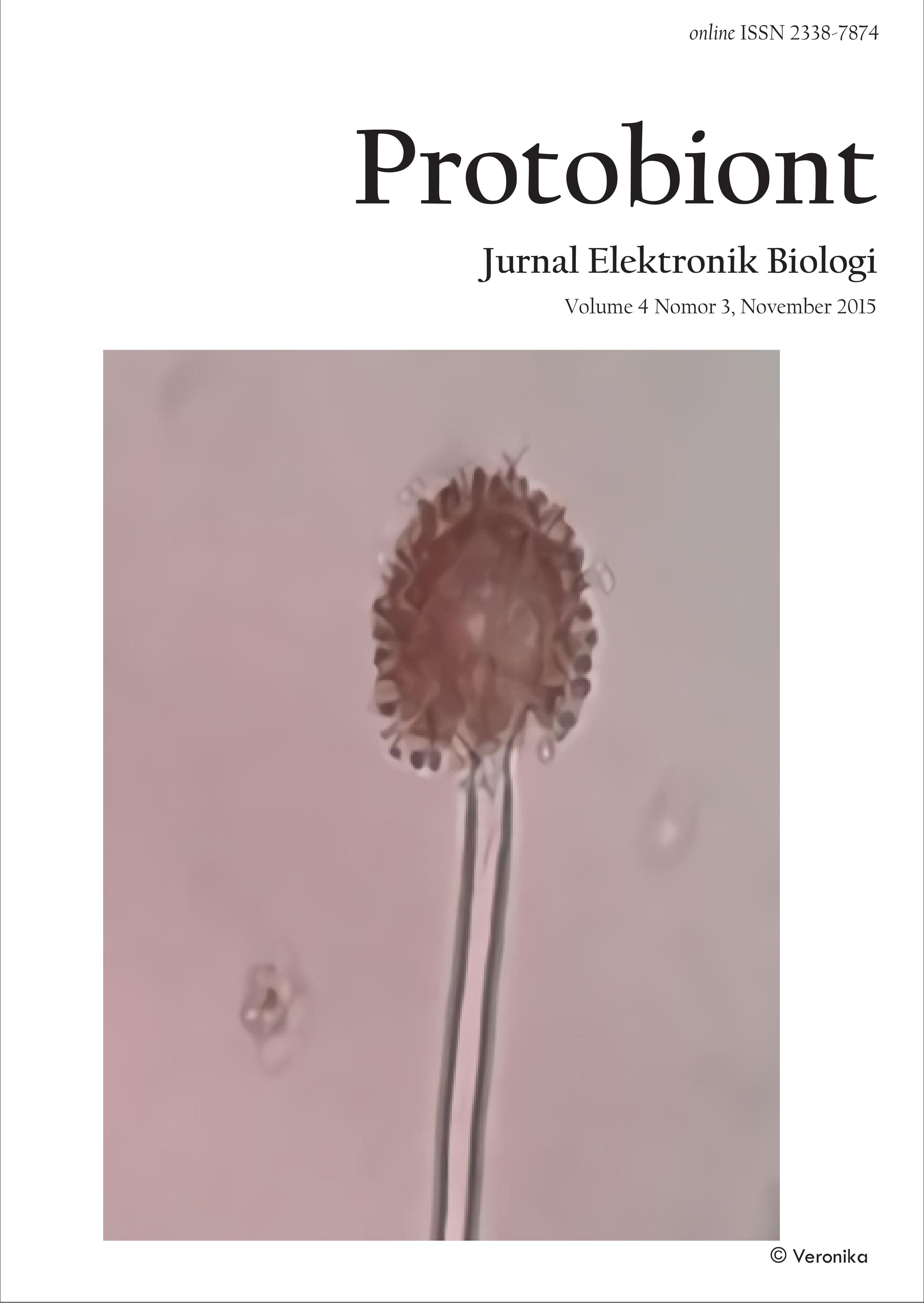
The Vesicular Arbuscular Mycorrhizal (VAM) fungi are a mutualistic symbiosis between the fungi and the plant root. The VAM fungi are capable of improving the plant growth. Information on the types of the MVA fungi on the roots of the langsat (L. domesticum) in peatsoil is yet to be known. This research aimed to find out the types of the MVA fungi and the level of infection on the roots of langsat (L. domesticum). The research was carried our at the Laboratory of Microbiology of the Faculty of Mathematics and Natural Sciences, Tanjungpura University from February to April 2015. The analysis of soil samples were conducted in the Laboratory of Chemistry and Soil Fertility of the Faculty of Agriculture, Tanjungpura University. The isolation of soil samples used the wet-sieving and decanting technique followed by the centrifugation technique. The research found a total of 232 spores of MVA fungi, consisting of the genera Glomus (10 types), Paraglomus (3 types) and Acaulospora (3 types). The results of observation on the root preparations found the structures of MVA fungi such as spores, hyphae and vesicles with the percentage of root infection at 41%, which fell into to the intermediate category.
Downloads
Published
Issue
Section
License
Authors who publish with this journal agree to the following terms:
- Authors retain copyright and grant the journal right of first publication with the work simultaneously licensed under a Creative Commons Attribution-ShareAlike License that allows others to share the work with an acknowledgement of the work's authorship and initial publication in this journal.
- Authors are not restricted by the journal from entering into separate, additional contractual arrangements for the non-exclusive distribution of the journal's published version of the work (e.g., posting it to an institutional repository or publishing it in a book), with an acknowledgement of its initial publication in this journal.
- Authors are permitted and encouraged to post their work online (e.g., in institutional repositories or on their website) after its publication in this journal. This approach aims to safeguard against potential plagiarism or unauthorized use of unpublished manuscripts, as outlined in the submission guidelines which state that this journal does not accept previously published manuscripts.
